Across the sea with Flatbrød in their pocket – The story of Norwegian emigration to America
- Siri

- 10. aug.
- 3 min lesing
Somewhere in a drawer, there’s a photo. A man in a wool vest, his mustache proud. A woman in a dark dress, holding a baby and a Bible. Behind them? Prairie land. But in their eyes? Fjords.
This is the story of the thousands of Norwegians who left the homeland, hearts heavy with hope, and crossed the ocean to begin again — with calloused hands, strong backs, and maybe a secret stash of brunost.
Why they left
In the mid-1800s, life in Norway was beautiful… and hard.Too many mouths, not enough land. Too many winters, not enough work.The promise of land and freedom in America pulled at them like spring after a long winter.
Some left to escape poverty.Some left for faith.Some left because their cousin Olaf already went and said there was coffee refills for free.
The journey over
They boarded tall ships with names like Restauration or Brage — vessels barely bigger than their dreams.
The trip took weeks, even months. Sickness, sea storms, and close quarters were common.Children played on deck while their parents held each other at night, wondering if they’d ever see the mountains again.
And when they finally saw the Statue of Liberty?Some wept.Some sang a hymn. Some just asked where to buy flour and a cow (neida…).
Where they settled
The Norwegian-Americans scattered like pinecones in the wind — but many found home in the Midwest:
Minnesota (aka “Little Norway with bigger mosquitoes”)
Wisconsin
Illinois
Iowa
Dakota
They built sod houses, Lutheran churches, and barns strong enough to hold both livestock and longing.
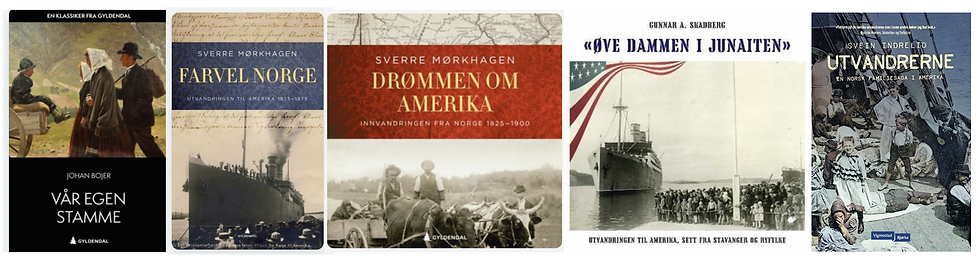
So maybe heritage isn’t just the land you’re born on — it’s the stories, the flavors, and the songs that follow you wherever you go.
Is that why 4.7 million Americans who carry Norwegian blood still feel it — in the smell of fresh waffles, in the taste of rømmegrøt, in the pride of 17. Mai. They may be far from the fjords, but the fjords are never far from them?
What they brought with them
They brought more than bags and Bibles:
Flatbrød that cracked like snow underfoot
Waffle irons tucked in the suitcase
Tales of trolls and lake spirits
Names that twisted American tongues like: Børre, Ragnhild, and Ingeborg
And most of all: a quiet stubbornness. The kind that says “I can build a home here too.”
What they left behind
The mountains. The dialects. The midnight sun and the salted herring.
But they carried it with them — in lullabies, Sunday suppers, and letters written in slanted script back home. And some never stopped missing the way the wind sounded in the birch trees.
Why it matters today
Because some of you — grandchildren and great-grandchildren of those who left — still make lefse and rømmegrøt, even if the flour is American and the butter comes in sticks. Maybe you still say “uff da” when you drop things. Maybe you still eat waffles that don’t quite fit in the iron. And sometimes, in quiet moments, you feel a tug from across the sea.
It matters, because you come from people who stared down long winters and still found time to knit sweaters, smoke fish, and sing songs about trolls.
Norway = strong folk — the kind who can row across a fjord in the rain, build a house out of logs, and still invite you in for coffee. They survived on stubbornness, teamwork, and knowing exactly where to find the best berries in the forest. So yes, remember where you come from — it’s in your bones, your humor, and the way you can spot a good piece of salmon from across the room.
With love for those who crossed, and those who waited at the dock,
Madam Budeie
From Fjord to Fork — and Sometimes All the Way to Minnesota


Kommentarer